
Why excluding Türkiye weakens European defense and empowers America’s adversaries?
Summary of my analysis for ‘Türkiye Today’ titled: “Why excluding Türkiye weakens European defense and empowers America’s adversaries?”
1. Fragmentation of NATO Cohesion
While Türkiye sought entry to the Security Action for Europe (S.A.F.E.) program in 2025, as a key NATO partner, its membership was effectively blocked by veto threats from Greece and Cyprus.
In addition, a nascent “Hebrew-Hellenic” axis—comprising Greece, Cyprus, and Israel—is increasingly moving to isolate Türkiye from the regional security architecture. Excluding the alliance’s second-largest military from regional security architectures (like the S.A.F.E. initiative) creates a “two-tier” NATO. This internal division undermines the unified front necessary to deter a revisionist Russia and fulfills Moscow’s strategic goal of a fragmented West.
2. Loss of Military-Industrial Scale
Türkiye’s battle-tested defense industry—specifically its naval technology and drones like the Bayraktar TB2—is vital for replenishing Western stockpiles. By walling off Türkiye, Europe limits its own “strategic autonomy,” making the continent smaller, weaker, and less capable of sustaining long-term regional defense.
3. Creation of Power Vacuums
Isolating Türkiye forces Ankara to seek “autonomous paths” outside of Western frameworks to meet its strategic needs. This displacement creates power vacuums in the Eastern Mediterranean and Eurasia that the Russia-China-Iran axis is eager to fill, ultimately strengthening the West’s primary peer-rivals.
4. Diversion of American Resources
A “realist” U.S. policy relies on capable allies to manage regional security. When European rivalries sideline Türkiye, the U.S. is forced to remain entangled in Mediterranean and Middle Eastern “forever wars” rather than pivoting its focus and resources toward the domestic economy and the primary threat of Chinese expansion in the Far East.
Read the full article here:

Why excluding Türkiye weakens European defense and empowers America’s adversaries?
By Ahmad Hashemi
December 31, 2025
The year 2025 profoundly transformed the Eastern Mediterranean, as a regional spillover from conflicts involving Israel, Iran, and post-Assad Syria further militarized the basin.
As the geopolitical landscape continues to shift, two critical strategic miscalculations are emerging within the Eastern Mediterranean and the broader European sphere, to Türkiye’s detriment.
First, a nascent “Hebrew-Hellenic” axis—comprising Greece, Cyprus, and Israel—is increasingly moving to isolate Türkiye from the regional security architecture.
Recent trilateral summits between Prime Minister Netanyahu, Prime Minister Mitsotakis, and President Christodoulides have solidified a partnership that seeks to bypass Türkiye in energy, security, and trade.
While framed by its proponents as a “pillar of stability,” an alliance that excludes Türkiye is, in reality, a gift to the West’s primary adversaries: Russia, China, and Iran.
By systematically excluding the second-largest army in NATO from the defense arrangements of Europe and the Mediterranean, these nations are not merely pursuing a local rivalry; they are actively undermining the cohesion of the European and transatlantic alliance, as well as the strategic interests of the United States in its peer-rival competitions.
Second, and more importantly, in response to Russia’s increasing threat to Europe and perceived American hesitation to engage under the Trump administration, the EU launched the Security Action for Europe (S.A.F.E.) program in 2025.
While Türkiye sought entry as a key NATO partner, its membership was effectively blocked by veto threats from Greece and Cyprus. While this veto may satisfy domestic voters, it serves the European Union poorly in a time of war.
As an indispensable NATO ally maintaining the alliance’s second-largest military, Türkiye’s exclusion from the €150 billion S.A.F.E. defense initiative marks a significant lapse in strategic foresight.
The political bias of this decision is underscored by Canada’s admission as the “only non-EU country with complete access.” While Canada’s inclusion is lauded for bolstering G7 and NATO ties, the same door remains closed to Türkiye, despite its far greater geographic and operational importance to European security.
This exclusionary move is a security risk, as it forces Ankara onto an autonomous path outside of Western frameworks and undermines the very cohesion upon which NATO depends.
It pushes Türkiye to look elsewhere for its strategic needs precisely at a time when the West requires its military-industrial might to counter a revisionist Russia.
To claim to build a “holistic” European defense while walling off the region’s most significant military power is not just a paradox; it is strategically hollow.
Türkiye’s defense industry, known for its battle-tested drones and naval technology, is essential for replenishing Western stockpiles.
As the conflict in Ukraine intensifies, Europe must not overlook the pivotal role Türkiye’s Bayraktar TB2 drones played in the nation’s early defense.
Some military experts argue that these drones, alongside other Turkish armaments, were instrumental in saving Kyiv during the initial Russian onslaught. Although the invasion was designed to capture the capital swiftly, the Russian armored advance was effectively halted by TB2 strikes.
In light of this, forcing a wedge between Ankara and Brussels does nothing but create a “two-tier” NATO that favors Moscow’s desire for a fragmented West.
The SAFE program aims for “strategic autonomy,” but autonomy requires scale. A Europe that deliberately excludes its most militarily powerful neighbor is a Europe that is smaller, weaker, and more vulnerable.
The anti-Türkiye maneuvers currently being played out in Jerusalem, Athens, and Nicosia are a luxury the West cannot afford in 2026.
When Greece and Cyprus use institutional vetoes to settle bilateral grievances, they prioritize “micro” disputes over the “macro” survival of the Western alliance. Every move to isolate Türkiye is a move in favor of the Russia-China-Iran axis.
Türkiye: Key to ‘America First’ Mediterranean Policy
In contrast to the exclusionary policies favored by certain European capitals, the approach championed by President Trump offers a more pragmatic and effective path.
The Trump administration has correctly identified that a strong, integrated Türkiye is the key to an “America First” foreign policy. By working with President Erdogan on major security matters, ranging from the stabilization of Gaza to post-Assad reconstruction in Syria, the U.S. can successfully disengage from the “forever wars” of the Middle East.
True “America First” realism understands that a stable Mediterranean requires Türkiye’s cooperation. Working with Türkiye allows the U.S. to delegate regional security to a capable, high-tech military ally, thereby freeing up American resources to focus on the southern border, the domestic economy, and the primary threat of Chinese expansion in the Far East. Weakening Türkiye does not lead to a safer Mediterranean; it creates a power vacuum that Russia is eager to fill.
President Trump must intervene to bring common sense back to the Eastern Mediterranean and the SAFE program. The U.S. should reject the exclusionary logic of anti-Türkiye alliances and instead champion an inclusive security framework that recognizes Türkiye’s indispensable role.
The United States must transcend the petty provincialism of Eastern Mediterranean rivalries to prevent the internal erosion of the Western alliance.
By adopting a realist partnership with Türkiye, the U.S. and the West can secure a vital foothold across the Eastern Mediterranean, the Middle East, and the Eurasian heartland.
Such a pivot is not merely a diplomatic courtesy; it is a strategic necessity that prioritizes American interests by leveraging the region’s most significant military power, allowing Washington to place its focus on the Far East, where all U.S. attention is needed.
Posted by ahmad hashemi at 1:29 PM No comments:
Email ThisBlogThis!Share to XShare to FacebookShare to Pinterest
04 January, 2026
Turkic pivot: How OTS is redrawing geostrategic map of Eurasia
My analysis for ‘Türkiye Today’ regarding the geopolitical shifts driven by the rise of the Turkic world:
· Emergence of a “Third Way” Power Bloc: The Organization of Turkic States (OTS) has evolved from a cultural group into a strategic “middle-power” bloc. By fostering collective autonomy through shared investment funds, a common alphabet, and simplified customs, member states are reducing their historical dependence on Russia and China to navigate Eurasia as sovereign actors.
· Security and the “Middle Corridor” Trade Route: The bloc is pivoting toward deep military cooperation, fueled by the success of Turkish defense technology and a desire to hedge against regional hegemons. This is paired with the development of the “Middle Corridor,” a Trans-Caspian transport network that bypasses sanctioned Russian routes and avoids Chinese “debt-trap” diplomacy, positioning Turkic states as the gatekeepers of East-West trade.
· Strategic US Alignment and Critical Minerals: Under the Trump administration, the U.S. has viewed the OTS as a vital counterweight to near-peer rivals. This includes the proposed “Trump Route for International Peace and Prosperity” (TRIPP) to link Central Asia to Europe via the Zangezur Corridor, as well as a strategic focus on securing Central Asia’s vast uranium and rare earth mineral reserves to decouple supply chains from Chinese dominance.
Read the full article here:
https://www.turkiyetoday.com/opinion/turkic-pivot-how-ots-is-redrawing-geostrategic-map-of-eurasia-3211803?s=1
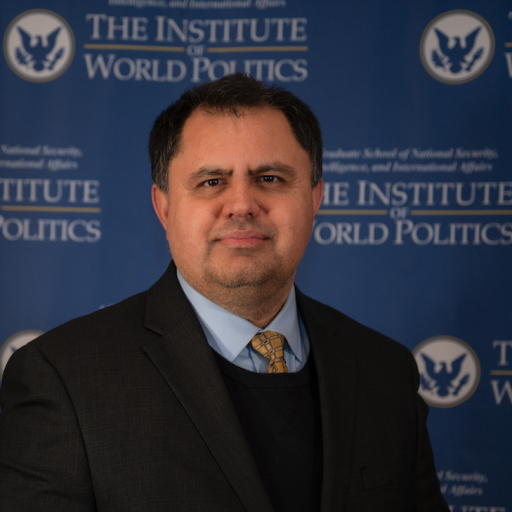
 Ahmad Hashemi, Director of the Middle East and Central Asia Program at the Global Policy Institute (GPI).