
The Future of Iran and the Prospect of War
The Fall of the Dictator vs. The Collapse of the Regime
My “two cents” on the war in Iran: First and foremost, like the majority of Iranians, I am pleased the “Thug of Tehran” has fallen. Khamenei had the blood of his own people and those of the region on his hands. So, it’s great that he’s gone. However, it is incredibly naive to declare victory and believe that the demise of Khamenei equals the collapse of the regime. This regime could endure for months or even years if the U.S. is not strategic. Iran is not Iraq, Venezuela, or Afghanistan. It is a nation of over 90 million people with strong means and a resilient military despite years of sanctions. Furthermore, the religious fanatics in power have both the ideological motivation and the structural means to resist.
The Ethics of Intervention
I oppose this war because innocent people—who are already being slaughtered by their own government—will die in even greater numbers. The brutality of a regime does not automatically give foreign nations a green light to attack and kill thousands more. Approximately three out of four countries in the world are ruled by dictatorships or authoritarian regimes, and that doesn’t give permission to the U.S. to invade those countries and commit regime change. A lot of these regimes do bad things—they terrorize their own people and other people—but that doesn’t justify a U.S. invasion of the whole world only because they are authoritarian or support terrorism. Even democratic countries commit acts that result in innocent deaths, but that does not grant a license to others to invade them.
Two Potential Scenarios
When it comes to the war, I have two predictions on how it will end:
- Scenario 1: The war ends in the near term, in a matter of a couple of days or weeks, and Iran, the U.S., and Israel all declare victory. The regime in Iran receives major blows but survives. President Trump will declare that he has destroyed the Iranian threat, and the Iranian regime will claim that it fought a war on multiple fronts against a global superpower and a regional military superpower, Israel. This in and of itself is a great victory for the regime in Iran and a strategic defeat for the U.S.
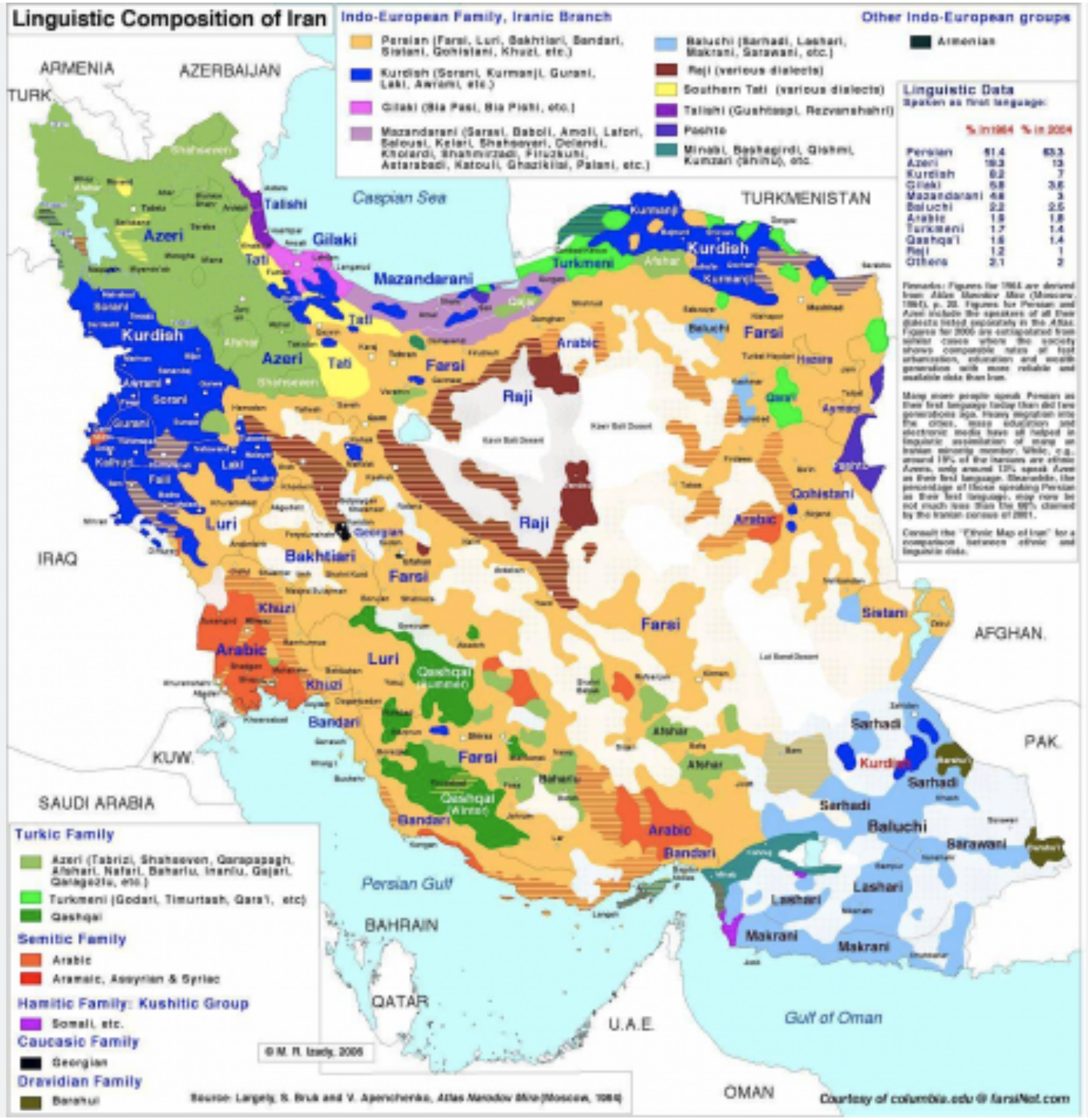
- Scenario 2: The war is prolonged. In this case, the U.S., among other things, will try to arm and train Kurdish forces to fight in Iran. Inter-ethnic rivalries make things more complicated. For instance, Azerbaijanis and Kurds have claims on certain territories, including the West Azerbaijan province. In the initial phase, Iranian Azerbaijanis may react by siding with the regime because they are concerned about Kurdish territorial expansionism, especially in West Azerbaijan, which Kurds claim as their territory. In this scenario, the Kurds would likely pay the heaviest price in blood, only to be eventually abandoned by the U.S. and most likely even by Israel.
Meanwhile, Turkey and the Republic of Azerbaijan stand to gain the most by helping South Azerbaijan achieve autonomy. Turkey and the Republic of Azerbaijan are going to win the most in this scenario (a prolonged war). When the central government in Iran is weak enough, they will intervene to help South Azerbaijan gain its autonomy. This doesn’t necessarily mean unification of the South and the North, as the Republic of Azerbaijan does not have the capacity to annex and absorb a region with three times its population: South Azerbaijan.
The Persian heartland would bear the brunt of a prolonged war. Because the IRGC’s intelligence, infrastructure, missile facilities, and nuclear sites are concentrated there, the region would face significant civilian casualties and infrastructure damage, leading to a decline in its influence.
Strategic Goals and the Opposition
Iran has three main goals in this war:
- Survival. This is a survival crisis for the regime; if it can endure this war, it will emerge stronger.
- Preventing internal fracture and defections.
- Preserving deterrence capabilities, including drones and ballistic missiles.
A critical factor is who can outlast whom as ammunition depletes on all sides. Iran is playing a delicate balancing act; they are less concerned about “winning” than they are about appearing weak.
America cannot change the regime by air bombardments. If the United States wants to win in the long run, it needs a unified opposition front. To remove the current regime and bring a new system, Reza Pahlavi—who is popular in the Persian heartland—needs to be forced to create an alliance with minority groups. For that to happen, the Pahlavi movement needs to kick out the fascist “Arianist” and pro-Nazi factions. Slogans like “One nation, one language, one country, one flag” need to be banned in their gatherings. Conversely, the ethnic minorities must commit to Iran’s territorial integrity while pursuing decentralization, whether through a federal or confederal structure. Reza Pahlavi can be the King of Persia, but Persia does not equal Iran. Don’t confuse Iran with ancient Persia. Today’s Iran consists of the Persian heartland plus South Azerbaijan, Kurdistan, Al-Ahwaz, Baluchistan, and other areas.
U.S. Strategic Concerns and the Path Forward
The U.S. is concerned by three things:
- Political tolerance for an extended war.
- Oil price sensitivity leading to inflation.
- America’s global bandwidth and its primary interests in Latin America and East Asia.
To overthrow the regime, all constituents must participate. The Persians have the most resources; the Kurds are the best fighters; the Iranian Arabs have 90% of the oil and gas; and the Azerbaijanis have the mightiest weight in terms of population and influence. For Persians to be more active, there must be guarantees that the country will not disintegrate but will instead adopt a structure allowing non-Persian groups to practice their autonomy and preserve their language.
The U.S. must help facilitate the creation of a council of opposition forces—inclusive of all major opposition groups—to avoid civil war. The regime tries to use “divide and rule” tactics, pitting groups against each other in places like West Azerbaijan province. These ethnic ambitions must be curtailed through a coalition; otherwise, we risk a civil war that nobody wants, even if everyone wants the regime gone.
Briefly, for the U.S. and its allies to succeed, they must foster an alliance between the Persian majority and ethnic minorities. This requires several key commitments:
- The Pahlavi Movement: Reza Pahlavi, who is popular in the Persian heartland, must distance his movement from fascist “Arianist” or ultra-nationalist factions. Slogans like “One nation, one language, one flag” must be abandoned in favor of a commitment to diversity.
- Ethnic Minorities: Groups such as the Azerbaijanis (the second most influential group), Kurds (the most experienced fighters), and Arabs (who sit on 90% of the oil and gas) must commit to Iran’s territorial integrity.
- A New Structure: To prevent civil war, there must be a move toward a federal or confederal structure. This would allow non-Persian groups to practice their own languages and cultures while maintaining a unified state.
Conclusion
The U.S. faces a massive test of political tolerance, oil price sensitivity, and global bandwidth. To overthrow the regime without triggering a civil war, a coalition council is essential. We must address internal nuances—such as the territorial disputes in West Azerbaijan—to ensure that the end of the regime leads to a stable, decentralized democracy rather than a fractured state of perpetual conflict, which would remain a threat to the international community.
#Iran #MiddleEast #Geopolitics #FutureOfIran #ForeignPolicy #RegimeChange
- #Iran
- #FutureOfIran
- #Geopolitics
- #MiddleEast
- #IranTransition
- #RegimeChange
- #Tehran
- #StrategicAnalysis
- #ForeignPolicy
- #USForeignPolicy
- #RegionalSecurity
- #StateBuilding
- #ConflictResolution
- #PoliticalStability
- #IranianOpposition
- #Pahlavi
- #EthnicFederalism
- #IranConflict
- #DemocraticTransition
- #WestAsia
- #NationalUnity
- #FutureOfIran
- #IranAnalysis
- #Geopolitics
- #MiddleEastSecurity
- #Khamenei
- #RegimeChange
- #NoToWar
- #IranMinorities
- #SouthAzerbaijan
- #Kurdistan
- #AlAhwaz
- #Baluchistan
- #FederalIran
- #DecentralizedIran
- #IranianDiversity
- #RezaPahlavi
- #IranOpposition
- #UnitedIran
- #IranianCoalition
- #PersianHeartland
- #USForeignPolicy
- #GlobalOilPrices
- #StrategicStability
- #AntiWar
- #InternalFracture
 Ahmad Hashemi, Director of the Middle East and Central Asia Program at the Global Policy Institute (GPI).