
My Perspectives on the Escalating Iran-Israel-U.S. Conflict for AnewZAnewZ:
The Myth of Iranian Collapse and the Reality of a Prolonged Conflict
The current conflict with Iran was initiated under a dangerous geopolitical delusion: the “Weakness Myth.” This narrative suggests that because Iran’s regional proxies, such as Hamas and Hezbollah, have been severely degraded since October 7, the Islamic Republic is at its lowest ebb. However, this assessment ignores historical reality and Iran’s internal resilience. While the 12-day war in June 2025 initially projected an image of Iranian restraint that some mistook for fragility, the state remains far more secure today than it was during the existential threats of the 1980s Iraq war or the chaotic internal power struggles of the post-1979 revolutionary era. With two decades of indigenous weapons development behind it, Iran is a defiant, rather than a dying, power.
The Failure of the “Quick Victory” Doctrine
The war’s progression—now entering its third week—has thoroughly debunked the promises of a “short, sweet, and quick” victory. President Trump was largely misled by “forever war advocates,” specifically Senator Lindsey Graham and Israeli Prime Minister Benjamin Netanyahu, alongside the Washington D.C. Israeli lobby. Decision-makers erroneously equated Iran with states like Venezuela, Cuba, or Afghanistan, predicting a rapid collapse.
Faced with the reality of a resilient adversary, Washington has reached a “sobering” moment. The illusions of a low-cost win have vanished, replaced by an acute awareness of how a prolonged conflict threatens global energy markets and the upcoming November U.S. elections. Consequently, the U.S. is now actively seeking an “exit ramp,” aiming to conclude hostilities after dealing significant blows to Iran’s military infrastructure.
Iran’s High-Risk Strategy of Global Pain
Iran is countering military pressure with a strategy designed to maximize international economic instability. The regime’s objective is to make the cost of war unbearable for the West by targeting energy corridors. A recent statement by top security official Ali Larijani regarding the Strait of Hormuz epitomizes this “all or no one” stance. Larijani warned that the strait would either be a path of prosperity for all or a source of “defeat and suffering” for warmongers. By broadcasting this message in six languages, Tehran signaled that if Iran is denied the use of this vital artery—which carries one-fifth of the world’s oil—then the global economy will suffer the consequences alongside them.
Domestic Stability and the “Rally Around the Flag”
Contrary to hopes of internal regime change, the conflict has triggered a “rally around the flag” effect. While many Iranians oppose the government’s policies, the vast majority—both domestically and in the diaspora—view the current strikes as a foreign invasion rather than liberation. The only notable exception is the monarchist faction, which has been marginalized for cheering the bombardment of their own country. Their vocal support for the adversary has alienated them from the domestic population, ensuring that major protest movements are unlikely to emerge in the coming months.
Escalation Risks: The Three Levers of Leverage
As the conflict persists, Iran holds three major strategic cards it has yet to fully play:
Mining the Strait of Hormuz: A move that would effectively choke global energy supplies.
The Houthi Front: Expanding the naval theater into the Gulf of Aden to stretch Western maritime resources.
Chemical Weapons: While the West has been obsessed with Iran’s nuclear ambitions, Tehran possesses a massive, sophisticated chemical weapons program.
If the regime perceives a threat of total collapse, it is highly probable they will deploy these chemical stockpiles against Israel and the Arab Gulf states. This underscores the reality that there is no “clean” victory in this theater; only a choice between a negotiated exit or a catastrophic regional escalation.
Geopolitical & Strategic Analysis
#IranAnalysis – For general geopolitical tracking.
#TehranStrategy – Focusing on the decision-making process within the Iranian leadership.
#ProxyWarMyth – Addressing the argument that Iran is not as weak as the degradation of its proxies suggests.
#StrategicDepth – Highlighting Iran’s indigenous weapons and historical resilience.
#RegionalEscalation – Covering the potential for the conflict to broaden.
#ForeverWars – Referencing the influence of lobbyists and the miscalculation of a “quick victory.”
Energy & Economic Impact
#StraitOfHormuz – The primary “choke point” mentioned by Ali Larijani.
#EnergySecurity – Highlighting the risk to 1/5th of the world’s oil supply.
#GlobalMarkets – The economic fallout of a prolonged war on the U.S. and global economies.
#OilTransit – Specifically regarding the “All or No One” stance on shipping lanes.
Domestic Iranian Politics
#RallyAroundTheFlag – Describing the internal unity often triggered by external military pressure.
#IranInternalPolitics – For discussions on the state vs. the public.
#IranianPublicOpinion – Distinguishing between the fringe “monarchist” views and the majority who oppose foreign invasion.
Escalation Risks (The “Three Points of Leverage”)
#HouthiFront – Regarding the expansion of the naval theater in the Gulf of Aden.
#ChemicalWeaponsRisk – Highlighting the “hidden” leverage Iran might use if facing total collapse.
#MaximumPressure – Analyzing the outcome of U.S. policy vs. Iranian defiance.
Policy & Diplomacy
#ExitRamp – Discussing Washington’s search for a way to end the war after initial strikes.
#DiplomaticFailure – Regarding the miscalculations comparing Iran to Venezuela or Afghanistan.
#MiddleEastCrisis2026 – To categorize the current timeline of the conflict.
The Professional Essentials
Regional Expertise
Academic & Intellectual Identity
#IWP (Institute of World Politics)
#HudsonInstitute
#DefenseStudies
#StrategicIntelligence
#PoliticalScience
Journalism & Media
#FreelanceJournalist
#OpEd
#InternationalRelations
#MultiLingual
#ProDemocracy
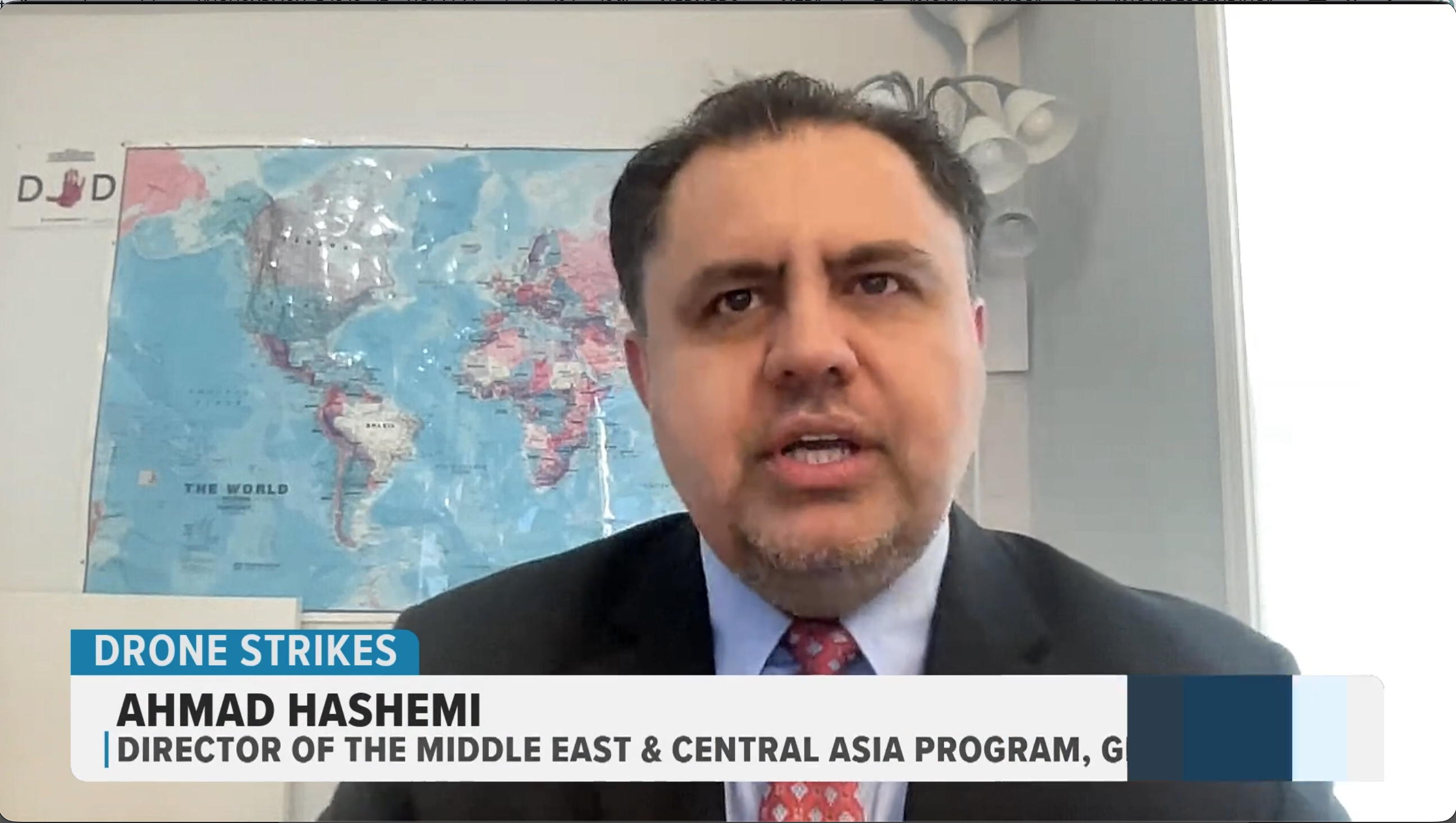
 Ahmad Hashemi, Director of the Middle East and Central Asia Program at the Global Policy Institute (GPI).