
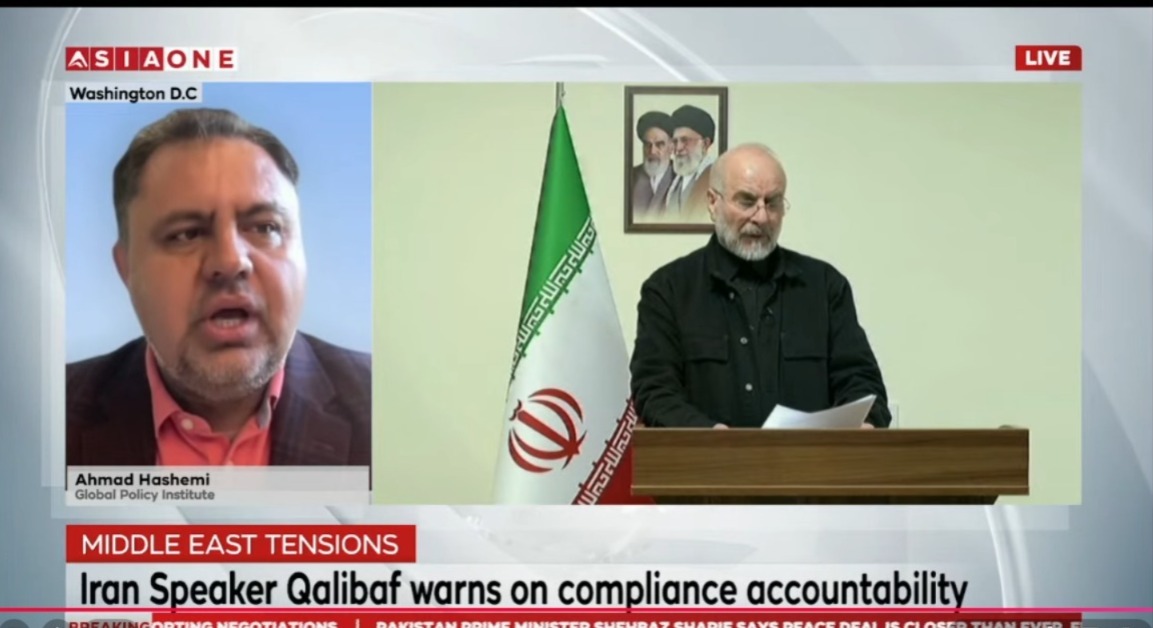
Analysis of US-Iran Geopolitical Developments
Ahmad Hashemi discussed the prospect of a US-Iran deal and other geopolitical developments regarding Middle East tensions on AsiaOne TV, focusing specifically on the relationship between Washington and Tehran. A diplomatic breakthrough seems near as Pakistan confirms a finalized draft agreement aimed at ending the conflict between the US and Iran. However, sharp divisions over technical details and enforcement mechanisms continue to threaten the fragile process.
Key Points of Discussion
- Iran’s Stance on Compliance: Iranian Parliament Speaker Qalibaf warned that commitments must be upheld without excuses. This statement aims to pressure Washington regarding compliance. The Iranian regime remains skeptical, worried that negotiations could serve as a cover for future military strikes.
- The “Israel First” Obstacle: “Israel-first” politicians, such as Senator Lindsey Graham, and highly influential pro-Israel think tanks in Washington, D.C.—such as WINEP, UANI, JINSA, and the FDD, and other neoconservative, pro-Israel, and “forever-war” centers of power—are not interested in Pakistan’s mediating role. They have raised various excuses, including questioning Pakistan’s reliability as an ally and mediator, even dragging up past issues like Osama bin Laden to argue that negotiation and mediation efforts should stop. Neoconservative politicians and the right-wing government in Israel oppose this round of diplomatic efforts entirely. They reject giving diplomacy a chance, believing instead that war is the primary tool in the US national security and foreign policy toolbox. Consequently, they actively oppose any mediation efforts or diplomatic breakthroughs.
- Nuclear Issues and Enrichment: Iranian Foreign Minister Abbas Araghchi suggested a phased approach, deferring sensitive issues like uranium enrichment and stockpiles. However, Iran is highly unlikely to relinquish its 60% enriched uranium stockpile, viewing it as a critical bargaining chip and a matter of national pride.
- Misinformation Campaigns: Pakistani Prime Minister Shehbaz Sharif warned of an ongoing misinformation campaign targeting the peace deal. Prominent neoconservative and pro-Israel figures in Washington are viewed as opponents of this mediation, preferring military options over diplomacy.
Leadership and Final Decisions
Despite divisions within Iranian society, a centralized authority oversees the nation’s strategy. If a deal is authorized by the leadership, the relevant officials have the mandate to execute it, ensuring that internal opposition will not block final policy decisions.
Link: https://youtu.be/-I0fwMbBol0
#AhmadHashemi #USIran #MiddleEastTensions #Diplomacy #GlobalNews #AsiaOne #InternationalRelations #Geopolitics #Washington #Tehran #Pakistan #ShehbazSharif #Iran #USPolitics #NuclearDeal #UraniumEnrichment #PeaceTalks #ForeignPolicy #NationalSecurity
 Ahmad Hashemi, Director of the Middle East and Central Asia Program at the Global Policy Institute (GPI).