
Why Iran Must Build the Tallest Trump Tower in the Middle of Tehran
Jul 02, 2026
Why Iran Must Build the Tallest Trump Tower in the Middle of Tehran
Ahmad Hashemi
Foreign policy is a chess match played with cold, calculated strategy, binding treaties, and ideological alignments. But to understand the current trajectory of American foreign relations under Donald Trump, one must throw out the traditional playbook entirely. Trump’s worldview does not operate on geopolitical principles, a rules-based order, or democratic values; it runs on personal connections, architectural vanity, and transactional deals.
Trump has hyperbolically threatened to wipe out the entire Iranian civilization. He has repeated the threat a dozen times, and he has the political will and intent to inflict serious harm by targeting Iran’s civilian infrastructure and population centers. This leaves no room for doubt in Iran that these are not just hyperbolic rhetoric, but rather real threats. If Iran, as a nation-state, wants to survive this menace and neutralize the threat stemming from Trump and Netanyahu, it needs to stop looking at the map of international law and start looking at real estate.
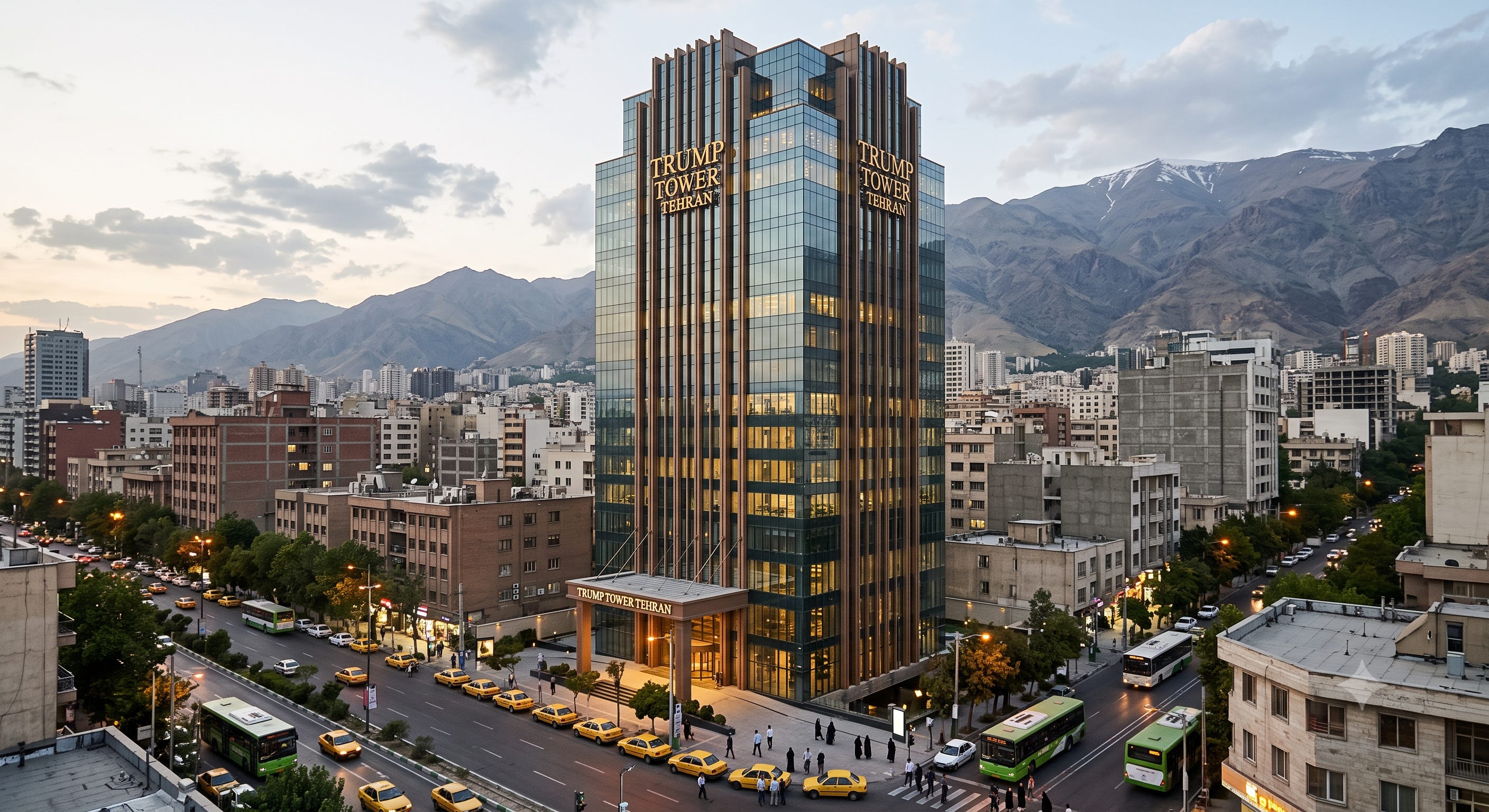
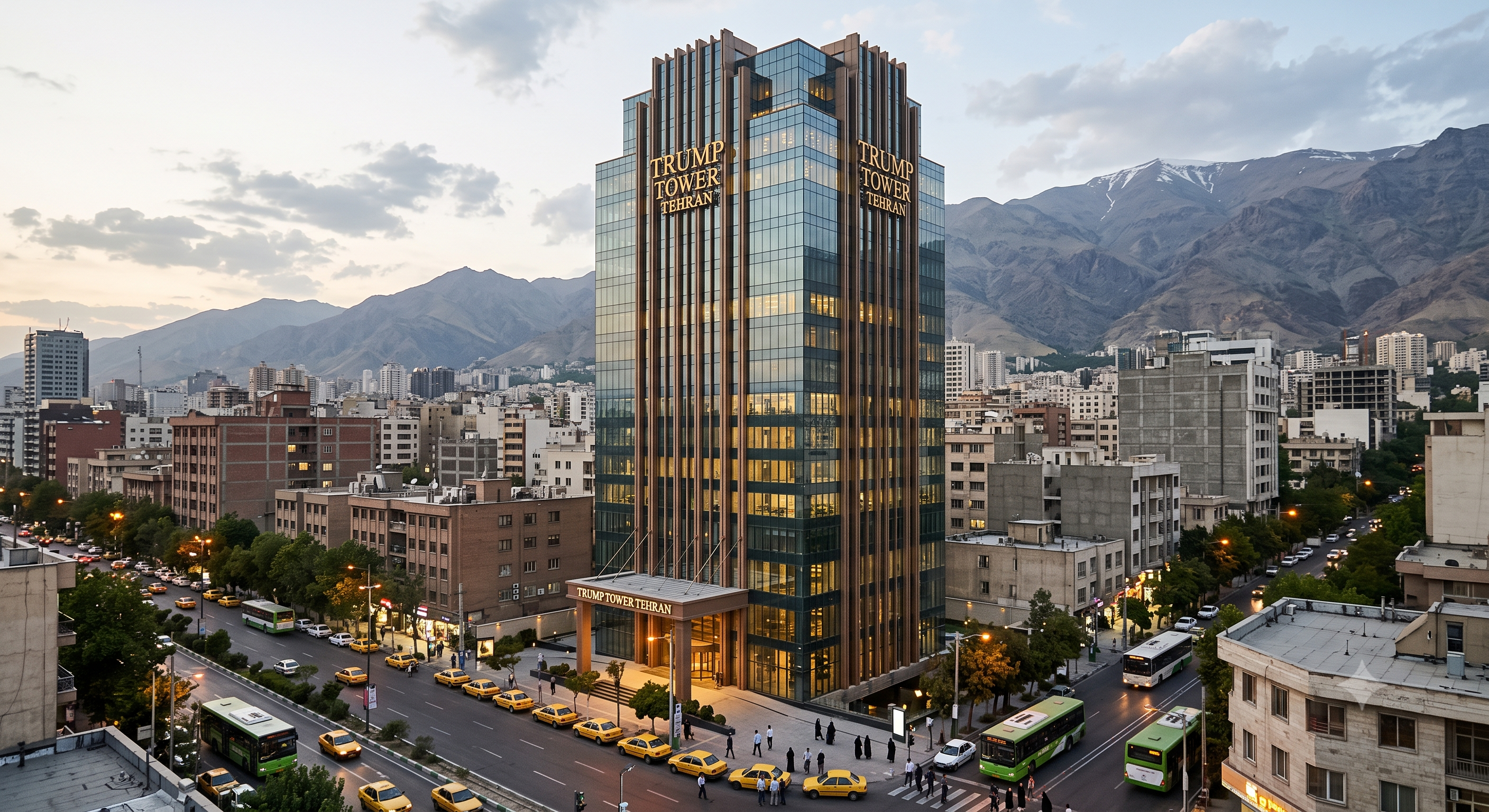
Iran needs to study and act upon Trump’s worst instincts, desires, and cravings—including his drive to monetize his presidency and his thirst for revenge, reward, and praise. However, as a first step toward creating a conducive environment for peace, trade, and business, Iran must allow a gleaming Trump Tower to be built in the middle of Tehran: a tower taller than those in Dubai and Tel Aviv to satisfy Trump’s ego.
At first glance, the proposition sounds entirely absurd, if not deeply offensive, to Tehran, considering that Trump has eliminated senior military, political, and religious leaders in Iran. It wouldn’t be easy to sell such an idea because it was Trump, after all, who pulled the United States out of the Joint Comprehensive Plan of Action (JCPOA) nuclear deal and ordered those assassinations. For a regime built on anti-imperialist rhetoric, welcoming the gilded brand of its chief American antagonist into the heart of its capital seems like an impossible ideological pill to swallow.
Yet the regime needs to act from a realpolitik perspective. To protect the country’s civilian infrastructure from future indiscriminate airstrikes, Tehran must make sacrifices, including abandoning policies such as threatening to kill Trump in retaliation for the elimination of senior figures like Qasem Soleimani and Ali Khamenei. Foreign policy requires pragmatism over pride. A closer look at recent history shows that Trump’s political grudges are remarkably malleable when real estate and praise are involved. Look no further than Damascus. Recently, a real estate company proposed a 45-story Trump Tower in the Syrian capital.
Designed as a strategic diplomatic overture to defuse tensions between Washington and Damascus, remove the $10 million bounty on the Syrian leader’s head, and lift U.S. sanctions, the project quickly gained traction, with developers actively seeking building permits and trademark licenses for the Trump name. If Syria—under the newly reconfigured leadership of former al-Qaeda figure turned rebranded statesman Abu Mohammad al-Jawlani (now Ahmad al-Sharaa)—can contemplate a Trump-branded skyscraper to reset relations with Washington, why shouldn’t Iran copy the blueprint?
If Ahmad al-Sharaa, who led an al-Qaeda-affiliated militant group repeatedly targeted by U.S. airstrikes during the Syrian civil war, can let go of old grievances and mend fences with the U.S.—and in return receive sanctions relief, cologne, and compliments from President Trump—why can’t Iran’s leaders replicate the same approach and be rewarded for it?
Trump has consistently shown that he values acquiescence, compliance, and personal rapport with authoritarian rulers over institutional alliances with democracies. He has openly praised authoritarian figures like Russia’s Vladimir Putin and China’s Xi Jinping while frequently clashing with the leaders of traditional, democratic American allies in the European Union, Great Britain, and Canada. In the Muslim world, his relationships are anchored by real estate, AI, cryptocurrencies, and other personal networks that have acted as major revenue drivers for the Trump family businesses. His existing towers in Istanbul secure his affinity for Turkey’s all-powerful leader, Recep Tayyip Erdoğan, and he maintains lucrative relations with the dynastic rulers of the United Arab Emirates, Saudi Arabia, and Qatar.
Iranians will be better off with the current repressive regime’s downfall. However, Trump and Israeli Prime Minister Benjamin Netanyahu are not threats to the regime alone; their unjust wars and indiscriminate airstrikes pose threats to the entire civilization and population of Iran. To defuse this menace, Iran needs to secure diplomatic progress.
Among other things, the mechanism for achieving this diplomatic breakthrough relies on understanding the ecosystem surrounding the presidency. This progress is attainable, as Trump is a deeply transactional leader who responds to the overtures of family and trusted business associates. To make the Tehran project a reality, Iranian intermediaries would need to establish lines of communication with the highly influential figures in Trump’s orbit—whether through corrupt family members like Jared Kushner and Donald Trump Jr., or close billionaire real estate allies like Steven Witkoff. By inviting a Trump-aligned construction conglomerate to break ground on a massive, 100-story luxury skyscraper—poised to be the tallest Trump Tower in the world—Tehran would immediately shift the calculus of American foreign policy.
This could be a once-in-a-generation opportunity for the Iranian people to improve ties with the U.S. The geopolitical return on investment for Iran would be staggering. History suggests that once Trump has a personal, branded stake in a country’s landscape, his willingness to accommodate its strategic ambitions increases exponentially. For the price of a premier piece of Tehran real estate and a massive construction contract, Iran could find a U.S. administration suddenly willing to overlook its regional influence, remove crippling sanctions, or even forgo rigid restrictions on its non-military nuclear program. A president invested in the safety and prestige of a signature property in Tehran is a president highly unlikely to authorize airstrikes against that very city, no matter the amount of pressure from the Israeli lobby.
Ultimately, international relations under a transactional Trump presidency are no longer about changing a nation’s core ideology; they are about understanding how to appease and incentivize the leader at the top. If a Trump Tower in Damascus can be seriously leveraged as a tool to lift sanctions and reset relations with a former al-Qaeda leader, Iran has a golden, high-rise opportunity staring it in the face. By building a monument to Trump’s favorite thing—himself—right in the middle of Tehran, the Iranian regime could achieve through concrete and glass what decades of traditional diplomacy, proxy groups, missiles, and drones failed to secure: a lasting ceasefire via a non-aggression pact with the United States.
· #AhmadHashemi
· #TrumpTowerTehran
· #RealEstateDiplomacy
· #TrumpForeignPolicy
· #TransactionalDiplomacy
· #IranUSRelations
· #IranForeignPolicy
· #MiddleEastGeopolitics
· #TehranSkyscraper
· #USIranRelations
· #SanctionsRelief
· #SyriaBlueprint
· #TrumpAndNetanyahu
· #PragmatismOverPride
· #ConcreteDiplomacy
· #TrumpWorldview
· #GeopoliticalChess
· #TheArtOfTheDealTehran
· #DonaldTrump
· #IranNews
· #ForeignPolicy
· #CurrentAffairs
· #InternationalRelations
· #AhmadHashemi
· #TrumpTowerTehran
· #RealEstateDiplomacy
· #TrumpForeignPolicy
· #TransactionalDiplomacy
· #IranUSRelations
· #IranForeignPolicy
· #MiddleEastGeopolitics
· #TehranSkyscraper
· #USIranRelations
· #SanctionsRelief
· #SyriaBlueprint
· #TrumpAndNetanyahu
· #PragmatismOverPride
· #ConcreteDiplomacy
· #TrumpWorldview
· #GeopoliticalChess
· #TheArtOfTheDealTehran
· #DonaldTrump
· #IranNews
· #ForeignPolicy
· #CurrentAffairs
· #InternationalRelations
 Ahmad Hashemi, Director of the Middle East and Central Asia Program at the Global Policy Institute (GPI).